Introduction
You’ve got a dent and you’re weighing up your options. Do you take it to a body shop, or call a PDR specialist?
It’s a fair question — and the right answer depends entirely on the type of damage. I’m not going to tell you PDR is always better, because it isn’t. There are situations where a body shop is the only option. But for the majority of dents I see — door dings, trolley damage, hail, minor impacts — PDR delivers a better result, faster and at a lower cost.
In this article, I’ll break down exactly how the two methods compare, when each one makes sense, and how to decide which is right for your situation.
Two Completely Different Approaches
The fundamental difference is in how each method treats the damage.
How PDR Works
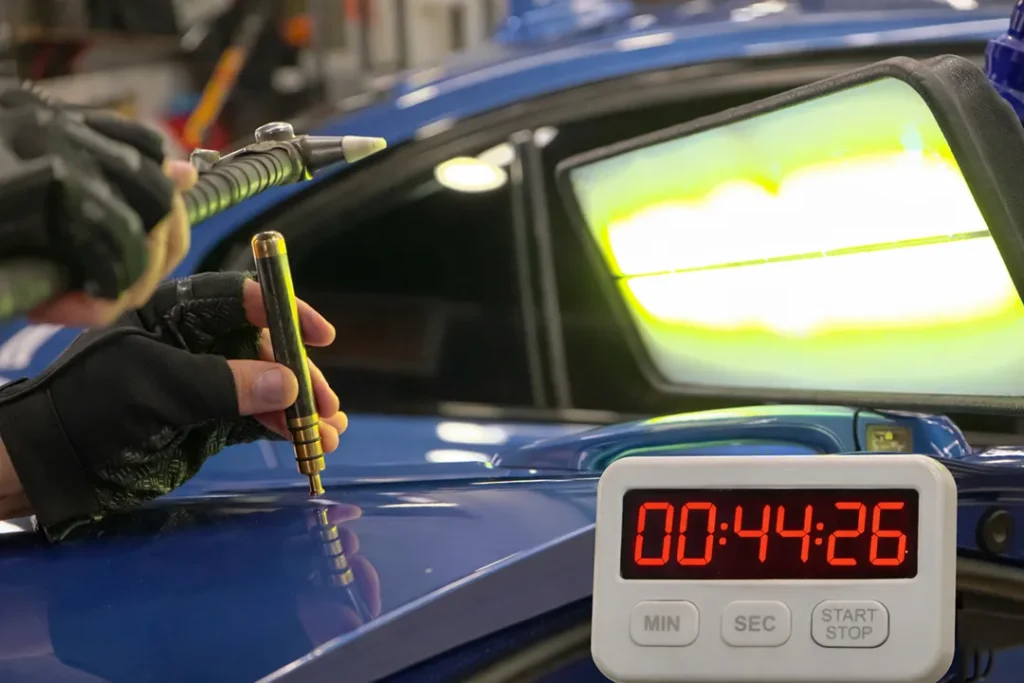
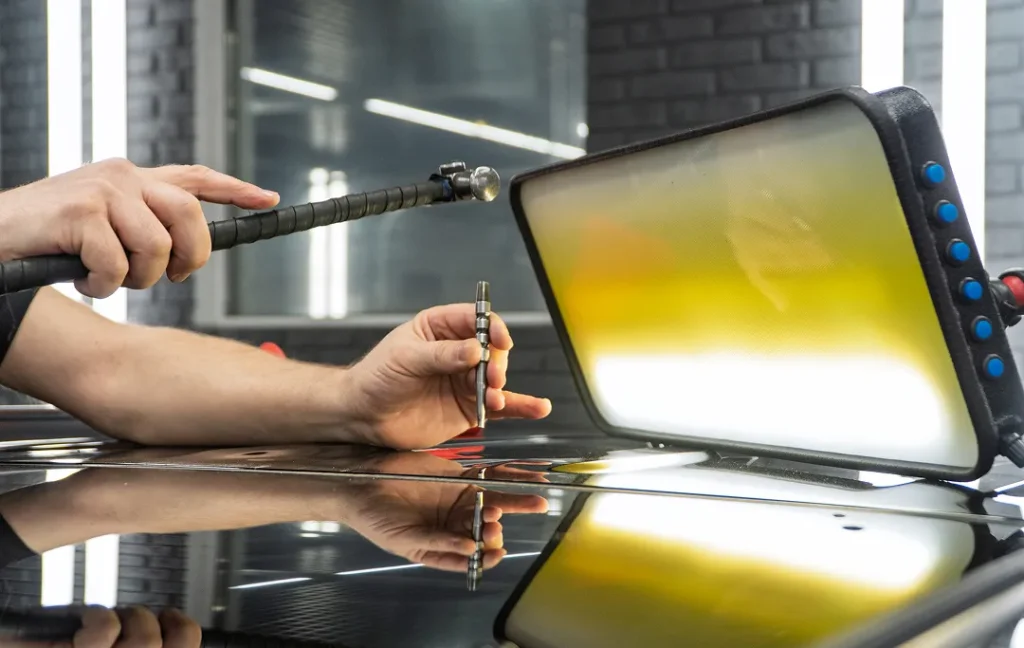
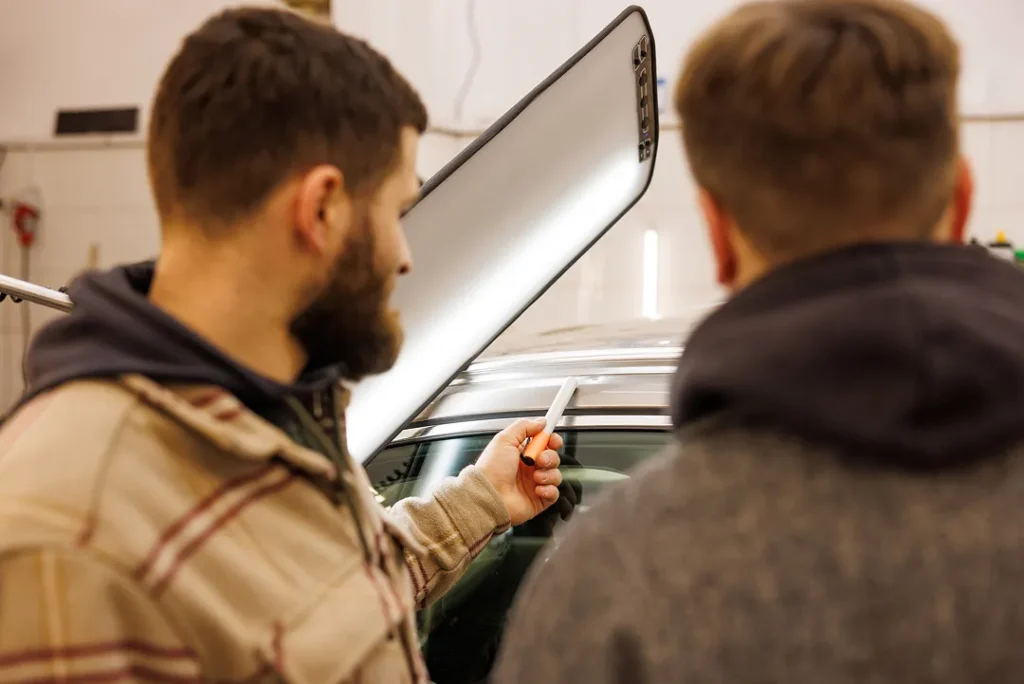
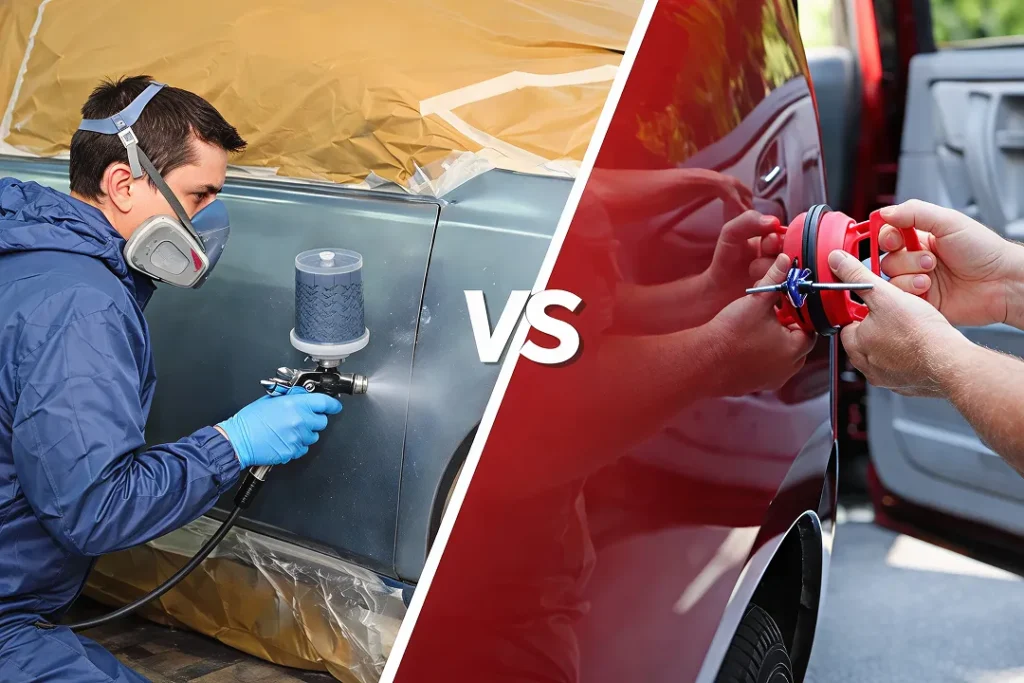
I use specialised tools to reshape the metal from behind the panel, pushing the dent back to its original form. No paint is applied, no filler is used, and nothing is sanded. The entire repair is mechanical — precision pressure applied by hand using rods, levers and glue pulling techniques.
The factory paint stays completely untouched.
How Body Shop Repair Works
A body shop takes the opposite approach. The damaged area is sanded down, filled with body filler, primed, colour-matched and repainted. In severe cases, the panel may be replaced entirely and then sprayed to match the rest of the vehicle.
The original paint is removed during the process.
These two approaches lead to very different outcomes — in cost, time, quality and long-term value.
The Full Comparison
Cost
This is where the difference is most obvious.
Body shop repairs involve materials — filler, primer, base coat, clear coat — plus labour for preparation, spraying and curing. A single panel respray typically starts around £200–£400 and increases with panel size. Multiple panels can quickly reach £1,000+.
PDR requires no materials at all. The cost reflects time and skill. A door ding repair starts from £30, and even large complex dents rarely exceed £200.
For the same dent, PDR typically costs 50–70% less than a body shop repair.
→ Full pricing guide: How Much Does PDR Cost?
Time
Body shop repairs involve multiple stages — each one needs drying or curing time. Drop your car off on Monday and you might collect it Thursday or Friday. Some repairs take over a week.
PDR is completed in a single visit. Most dents take 1–2 hours. Even complex creases or multiple dents are usually finished within half a day. And because I come to your location, there’s no time wasted on drop-offs and collections.
Paint Quality
This is the factor many people overlook — and it’s arguably the most important.
With PDR: Your factory paint is 100% untouched. The colour, texture and thickness remain exactly as they left the production line. There is zero evidence of repair.
With a body shop respray: Even the best colour match is never identical to factory paint. The texture of hand-sprayed clear coat differs from factory-applied finish. Over time, repainted panels can show slight colour drift, orange peel texture, or edge lines where the new paint meets the original.
This matters particularly for darker colours (black, dark blue, dark grey) where even minor differences in paint depth become visible in certain lighting.
Resale Value
When you sell or part-exchange your vehicle, a paint depth gauge can reveal respayed panels. Dealers and savvy buyers check for this — a repainted panel can reduce a car’s value by hundreds of pounds, even if the repair was done well.
PDR leaves no trace. No filler, no respray, no change in paint depth. A PDR-repaired panel reads exactly the same as an untouched one — because it is.
For anyone planning to sell, lease return or part-exchange their vehicle, this distinction matters significantly.
Convenience
A body shop requires you to:
- Drive to their location
- Leave the car for several days
- Arrange alternative transport
- Return to collect
With my mobile PDR service:
- I drive to your location
- The repair is completed while you’re at home or work
- Your car never leaves your sight
- It’s ready to use the moment I’m finished
When a Body Shop Is the Right Choice
I believe in being honest about what PDR can and can’t do. There are situations where a body shop is the better option:
Paint damage — If the dent has cracked, chipped or scratched through the paint, the area needs to be repainted. PDR can only reshape the metal; it cannot repair paint.
Severe structural damage — If a panel is severely buckled, torn or creased beyond the metal’s ability to recover, replacement and respray may be necessary.
Large collision damage — If the impact has affected the structural integrity of the vehicle (crumple zones, chassis rails), this goes beyond cosmetic repair and needs specialist body shop attention.
Existing filler — If the panel has been previously repaired with filler, PDR will crack the filler during reshaping. In this case, the panel needs to be stripped and redone properly.
If any of these apply to your dent, I’ll tell you. I’d rather direct you to the right solution than attempt a repair that won’t deliver a good result.
Real Scenarios: Which Would You Choose?
Scenario 1: Car Park Door Ding
A small round dent on your passenger door. Paint is perfect, just a clean indent about 2 cm wide.
- Body shop: Sand, fill, prime, respray the door — £250–£400, 2–3 days
- PDR: Pushed out from behind — from £30, 30–45 minutes
Winner: PDR — faster, cheaper, and the door keeps its original paint.
Scenario 2: Hail Damage Across the Roof
A storm has left 20+ small dents across your roof and bonnet. Paint is intact on all of them.
- Body shop: Strip, fill and respray two panels — £1,500–£3,000+, 1–2 weeks
- PDR: Each dent individually removed — from £800, 1–2 days
Winner: PDR — dramatically cheaper, no respray, original finish preserved across every panel.
Scenario 3: Deep Scratch with Dent
Someone has keyed your car, leaving a deep scratch with a dent underneath. The paint is broken through to bare metal.
- Body shop: Sand, fill, prime and respray — the correct approach for paint damage
- PDR: Not suitable — the scratch requires paint repair
Winner: Body shop — the broken paint means PDR can’t help here.
Scenario 4: Crease Along the Body Line
A cyclist has scraped past your car, leaving a 15 cm crease along the rear quarter panel. The paint is intact but the metal is sharply folded.
- Body shop: Fill and respray — £500–£900+, 3–5 days
- PDR: Crease work from behind — from £80, 2–3 hours. May retain a very slight trace on the body line.
Winner: PDR in most cases — I’ll assess the crease and tell you upfront what level of result to expect. If it’s beyond PDR, I’ll say so.
What About Smart Repair?
You might also come across “smart repair” or “SMART repair” services. These are smaller-scale body shop repairs — localised sanding and repainting of a small area rather than a full panel respray.
Smart repair sits between PDR and full body shop work:
- Cheaper than full respray, but more expensive than PDR
- Faster than full respray, but slower than PDR
- Still involves paint — so the same concerns about colour matching apply
For dents where the paint is intact, PDR is still the better option. Smart repair is useful when there’s minor paint damage (a chip or light scratch alongside a dent) that doesn’t justify a full panel respray.
How to Decide
Ask yourself these questions:
Is the paint intact? → Yes: PDR is almost certainly the better choice → No: You’ll need body shop or smart repair
Is the damage structural? → Yes: Body shop → No: PDR
Do you want to keep the original factory paint? → Yes: PDR is the only option that preserves it
Are you planning to sell or return the vehicle? → Yes: PDR leaves no trace — a respray shows up on paint depth gauges
Do you want it done today? → Yes: PDR — I can often fit you in within days, and the repair itself takes hours not days
Still Not Sure?
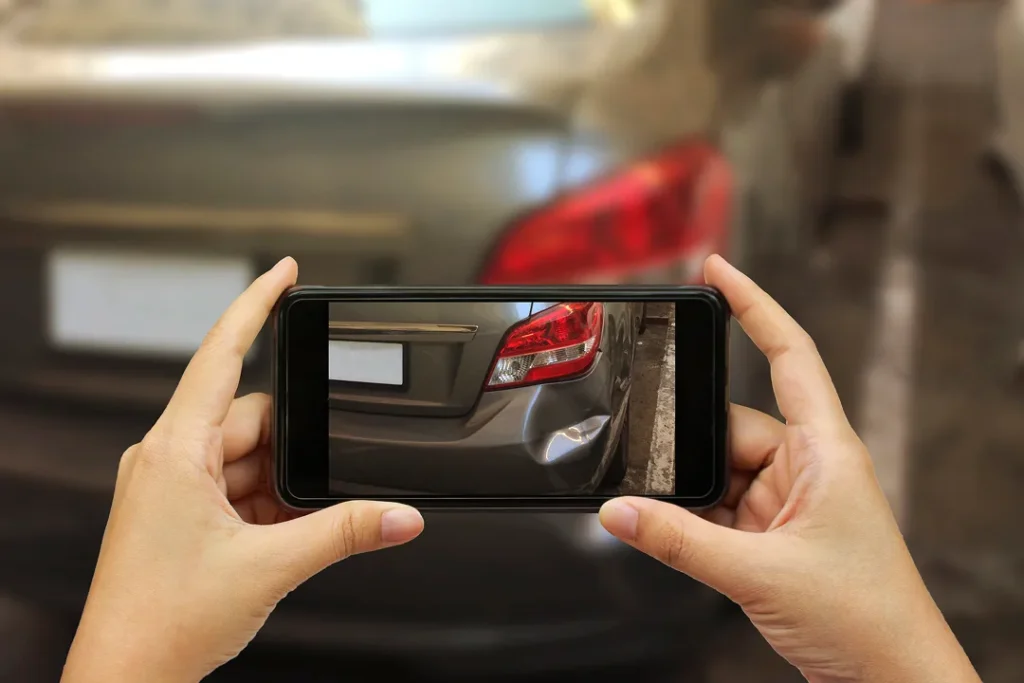
The easiest way to decide is to let me look at the dent. Send photos via WhatsApp and I’ll give you an honest assessment — including telling you if a body shop would be the better route.
No charge, no pressure. Just straightforward advice.
→ Send photos for a free assessment → Not sure if your dent is suitable? Read this guide
Key Takeaways
- PDR reshapes the metal without paint — body shops sand, fill and respray
- PDR costs 50–70% less and takes hours instead of days
- Factory paint is preserved with PDR — a respray always differs from the original
- PDR-repaired panels show no trace on paint depth gauges — important for resale
- Body shops are the right choice when paint is damaged or structural repair is needed
- Smart repair fills the gap for minor paint damage alongside a dent
- Not sure? Send photos and I’ll recommend the best approach honestly