Introduction
You’ve found a dent on your car and you’re wondering — can this actually be fixed without repainting?
It’s the question I get asked more than any other. The good news is that the vast majority of dents I see are suitable for Paintless Dent Repair. But not every dent qualifies, and I’d rather be upfront about that than waste your time.
In this guide, I’ll walk you through exactly what makes a dent suitable for PDR — and what doesn’t. By the end, you’ll have a good idea of whether your dent can be repaired. And if you’re still not sure, just send me a photo and I’ll tell you.
The Three Things I Check
When I assess a dent, I’m looking at three things:
1. Is the Paint Intact?
This is the most important factor. PDR works by reshaping the metal from behind — so the paint needs to be undamaged.
PDR is suitable when:
- The paint surface is smooth with no chips or cracks
- There’s no flaking, bubbling or peeling
- The dent was caused by a blunt impact (trolley, door, hail, ball)
PDR is not suitable when:
- The paint is cracked, chipped or scratched through to bare metal
- There’s existing rust around the dent
- The panel has been previously repaired with filler or non-factory paint
If the paint is damaged, a body shop respray is usually the better option. I’ll always tell you honestly if that’s the case.
2. Can I Access the Back of the Panel?
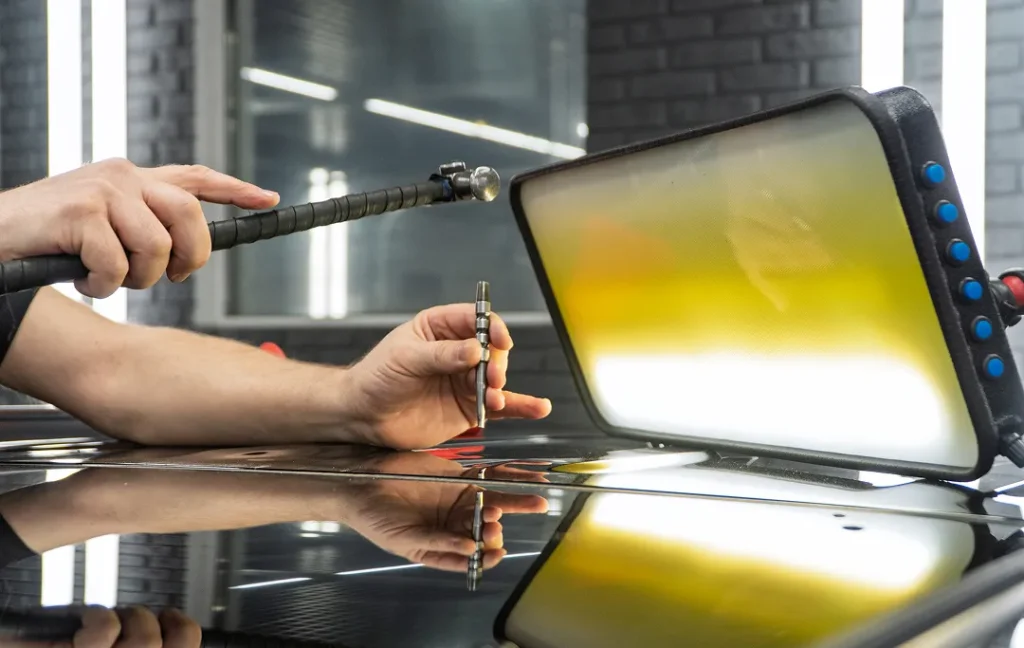
To push the dent out, I need to reach behind the panel with my tools. Most panels on modern vehicles have access points — through door gaps, window channels, behind trim panels or through light fittings.
Easy access:
- Doors (front and rear)
- Bonnet
- Boot lid
- Roof (through headliner)
- Front wings
More difficult access:
- Rear quarter panels — these are welded to the body, so access is limited
- Panels near structural bracing
- Areas behind double-skinned metal
Difficult access doesn’t always mean impossible — it just means the repair takes more time and skill. I’ll let you know what’s involved before we start.
3. How Deep Is the Damage?
PDR can fix a much wider range of dents than most people expect. But there are limits.
Ideal for PDR:
- Shallow, round dents (door dings, hail)
- Medium dents with a smooth profile
- Gentle creases without sharp folds
Challenging but often possible:
- Larger dents with some depth
- Creases along body lines
- Multiple dents across a panel (hail damage)
Usually not suitable:
- Very deep dents where the metal has stretched significantly
- Sharp, knife-edge creases
- Dents on the very edge of a panel with no access
Even for complex dents, I can often achieve a 90–95% improvement. I’ll always explain the expected result before starting work.
Common Dent Types — Can They Be Fixed?
Here’s a quick reference for the most common types of damage I see:
| Dent Type | Suitable for PDR? | Notes |
|---|---|---|
| Door ding (car park) | ✅ Yes | The most common repair I do |
| Shopping trolley dent | ✅ Yes | Usually straightforward |
| Hail damage | ✅ Yes | Even 30+ dents per vehicle |
| Minor collision dent | ✅ Usually | Depends on paint condition |
| Bonnet dent (fallen branch) | ✅ Yes | Good access from underneath |
| Roof dent | ✅ Yes | Access through headliner |
| Crease along body line | ⚠️ Often | Takes more time, may retain minor trace |
| Dent with paint chip | ❌ No | Paint damage requires respray |
| Deep sharp crease | ⚠️ Depends | Assessment needed |
| Dent with existing filler | ❌ No | Filler will crack during reshaping |
| Plastic bumper dent | ❌ No | PDR is for metal panels only |
What About Older Cars?
A question I hear regularly — does PDR work on older vehicles?
In most cases, yes. The key factor is the paint condition, not the age of the car. If the factory paint is still in good shape with no cracking or flaking, PDR works just as well on a 15-year-old car as on a brand new one.
However, older vehicles sometimes have:
- Brittle paint that may crack during the repair
- Previous bodywork with filler underneath
- Rust around the dent area
I check for all of these before starting. If there’s any risk of paint damage during the repair, I’ll flag it upfront.
What About Aluminium Panels?
Many modern vehicles — particularly premium brands like Tesla, Audi, BMW and Jaguar — use aluminium body panels. These require a different approach because aluminium behaves differently to steel.
I work with aluminium regularly. The metal has less “memory” than steel, so it takes more precision and patience. But the results are the same — a clean repair with the factory finish intact.
If your vehicle has aluminium panels, just mention it when you send photos and I’ll factor it into the assessment.
The Easiest Way to Find Out
You don’t need to diagnose the dent yourself. The simplest approach is to send me photos and I’ll give you an honest answer — usually within a couple of hours.
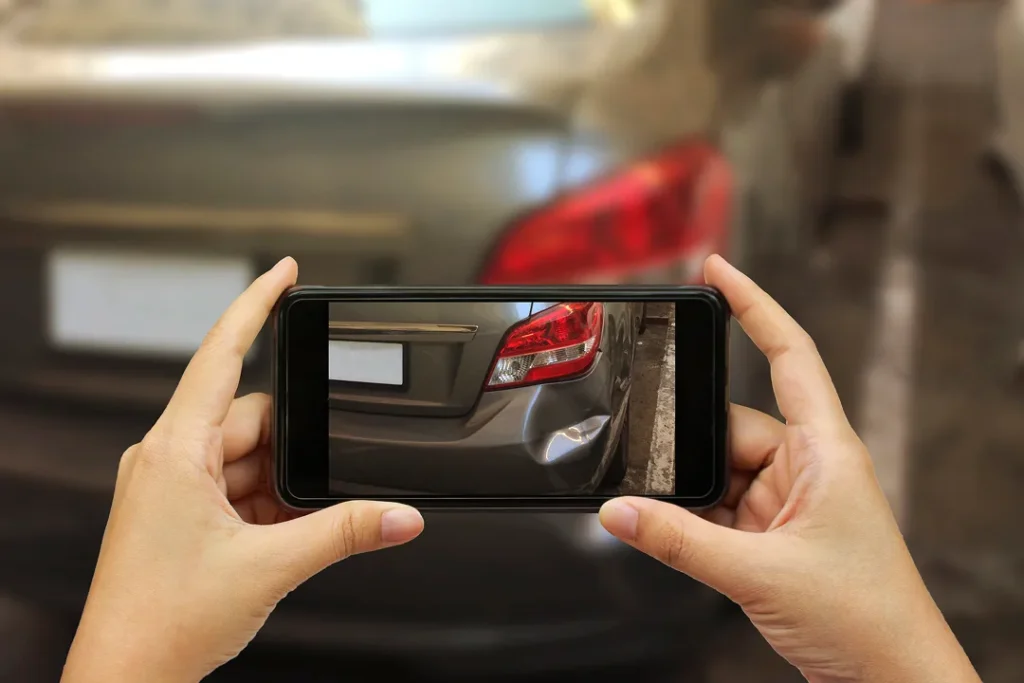
How to send photos that help me assess accurately:
- Clean the area — wipe the panel so the dent is clearly visible
- Use good lighting — natural daylight or a bright lamp at an angle
- Take 3–4 photos — straight on, from the side, and a close-up
- Include a reference — hold a coin or your finger next to the dent for scale
- Send your vehicle make and model — this tells me what the panel is made of
→ How to Photograph Your Dent for an Accurate Quote
What Happens If PDR Won’t Work?
If your dent isn’t suitable for PDR, I won’t try to repair it. I’d rather be honest than deliver a poor result.
In those cases, I’ll explain exactly why PDR isn’t the right approach and recommend the best alternative — whether that’s a body shop respray or a smart repair service. I have good working relationships with trusted body shops in the area and I’m happy to point you in the right direction.
Not Sure? Just Ask.
Send me photos of your dent — there’s no charge and no obligation. I’ll tell you whether PDR will work, what the repair will involve, and give you a fixed price.
Most enquiries get a response within 2 hours during working hours.
→ Send photos via WhatsApp → Use the contact form
Key Takeaways
- Most dents with intact paint are suitable for PDR
- The three key factors are: paint condition, panel access and dent depth
- Door dings, trolley dents and hail damage are almost always repairable
- Dents with cracked paint, filler or on plastic bumpers are not suitable
- Aluminium panels and older cars can usually be repaired
- Send photos for a free, honest assessment — I’ll tell you straight