Introduction
How long does PDR take? Most repairs are finished in under two hours — but it depends on the type of dent. You’ve decided on PDR — now you want to know how long you’ll actually be without your car. Or more accurately, how long you’ll be waiting while I work on it at your location.
The short answer: most repairs are finished in under two hours. But “most” doesn’t tell you much about your specific dent. A tiny door ding and a 20 cm crease are completely different jobs with very different timescales.
In this guide, I’ll give you honest, realistic repair times based on the work I do every week — so you know exactly what to expect before we start.
Quick Reference: Repair Times by Dent Type
| Dent Type | Typical Repair Time |
|---|---|
| Small door ding (coin-sized) | 20–40 minutes |
| Medium dent (palm-sized, no crease) | 45–90 minutes |
| Large dent (shallow, good access) | 1.5–2.5 hours |
| Crease along a body line | 2–4 hours |
| Deep crease with limited access | 3–5 hours |
| Multiple small dings (3–5 per vehicle) | 1–2 hours total |
| Hail damage (single panel, 10–15 dents) | 2–4 hours |
| Hail damage (full vehicle, 30+ dents) | 1–2 days |
These are working times — from the moment I start the repair to the final quality check. They don’t include the few minutes of setup (positioning LED boards, removing trim) or the brief inspection at the end where I walk you through the result.
What Makes a Repair Faster or Slower?
Two dents that look identical in a photo can take very different amounts of time. Here’s what actually determines how long I’ll be working on your car.
Crease vs No Crease
This is the single biggest factor. A round dent without a crease is relatively straightforward — the metal remembers its original shape and responds well to controlled pressure from behind.
A crease changes everything. The metal along the fold line has been stretched and compressed in opposite directions. I have to work along the crease millimetre by millimetre, gradually lifting the low point while managing the high ridges on either side. It’s meticulous work that can’t be rushed without risking an uneven finish.
Rule of thumb: a crease doubles or triples the repair time compared to a round dent of the same size.
Depth
A shallow dent where the metal has barely moved might need only a few careful pushes to pop back. A deep dent — where the metal has been displaced several millimetres — requires multiple passes, gradually bringing the surface back in stages.
Rushing a deep dent causes problems. Push too hard or too fast and you create high spots that then need to be tapped back down. The most efficient approach is controlled, patient pressure — which takes time but delivers a cleaner result first time.
Panel Location
Some panels are a pleasure to work on. Doors have excellent access through the window channel and door card removal. Bonnets open up completely. Boot lids are typically straightforward.
Other panels require more creative access:
- Roof dents — I access these through the headliner, which needs to be carefully lowered. The access is good once I’m in, but setup takes longer.
- Rear quarters — These panels are welded to the body structure. Access is limited to small gaps, which means I’m working with shorter tools at awkward angles. Every push takes more precision.
- Wing panels near the wheel arch — Access is often through the wheel well liner, which needs removing. The panel curves add complexity.
More time accessing the panel means more time overall — even if the actual dent work is quick.
Metal Type
Most vehicles have steel body panels, which respond predictably to PDR tools. The metal has good “memory” — it wants to return to its original shape, which helps the repair.
Aluminium panels — common on premium vehicles like Tesla, Range Rover, Audi A8 and Jaguar — behave differently. Aluminium has less memory and can be more resistant to reshaping. It requires a lighter touch, more passes, and often slightly longer repair times.
I work with both regularly. If your vehicle has aluminium panels, I’ll factor that into the time estimate.
Temperature
This one surprises most people. Metal responds differently at different temperatures.
On a warm day, steel is slightly more pliable and responds more easily to pressure. On a very cold morning — particularly during winter — the metal is stiffer and the repair takes marginally longer.
It’s not a dramatic difference, but on complex repairs in January, I sometimes use a heat gun to gently warm the panel before working. This adds a few minutes but ensures better results.
A Typical Repair Visit, Start to Finish
Here’s what a standard mobile repair looks like in real time, so you can plan your day:
Small Door Ding (Total: ~45 minutes)
| Stage | Time |
|---|---|
| Arrival, inspection, setup | 5–10 min |
| Remove door card or access trim | 5 min |
| Dent repair | 20–25 min |
| Refit trim, final check | 5 min |
| Walk-through with you | 2 min |
Medium Dent with Crease (Total: ~2 hours)
| Stage | Time |
|---|---|
| Arrival, inspection, setup | 10 min |
| Access panel (remove trim/lights) | 10–15 min |
| Main repair work | 60–80 min |
| Crown levelling and fine adjustment | 15–20 min |
| Refit all trim, final quality check | 10 min |
Multiple Dings — Trade Vehicle (Total: ~2 hours)
| Stage | Time |
|---|---|
| Walk-around assessment of all dents | 10 min |
| Access first panel, repair dings | 30–40 min |
| Move to second panel, repeat | 30–40 min |
| Final check all repairs under LED | 15 min |
| Sign-off with dealer | 5 min |
Can You Use the Car Immediately After?
Yes. The moment I’m finished, your vehicle is ready to drive. There’s no drying time, no curing period, no “don’t wash it for 48 hours” instructions.
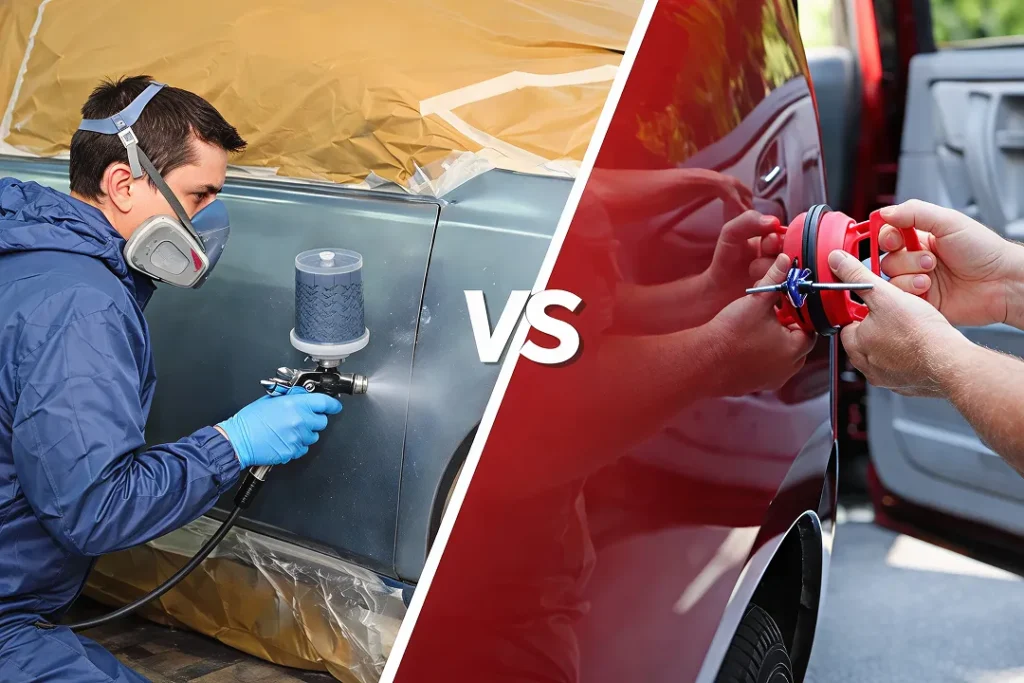
This is one of the practical advantages over body shop work, where freshly painted panels need time to fully harden and you’re often advised to avoid washing, waxing or polishing for days or even weeks.
With PDR, nothing has been applied to the car. The repair is purely mechanical. Drive it, wash it, park it — immediately.
Do You Need to Be Present?
Not necessarily. Many of my private clients give me access to their vehicle and carry on with their day — at home, at work, wherever.
For dealerships, I often work through a batch of vehicles while the team carries on with business. I’ll do a walk-around with your prep manager before and after, but there’s no need for someone to watch the entire repair.
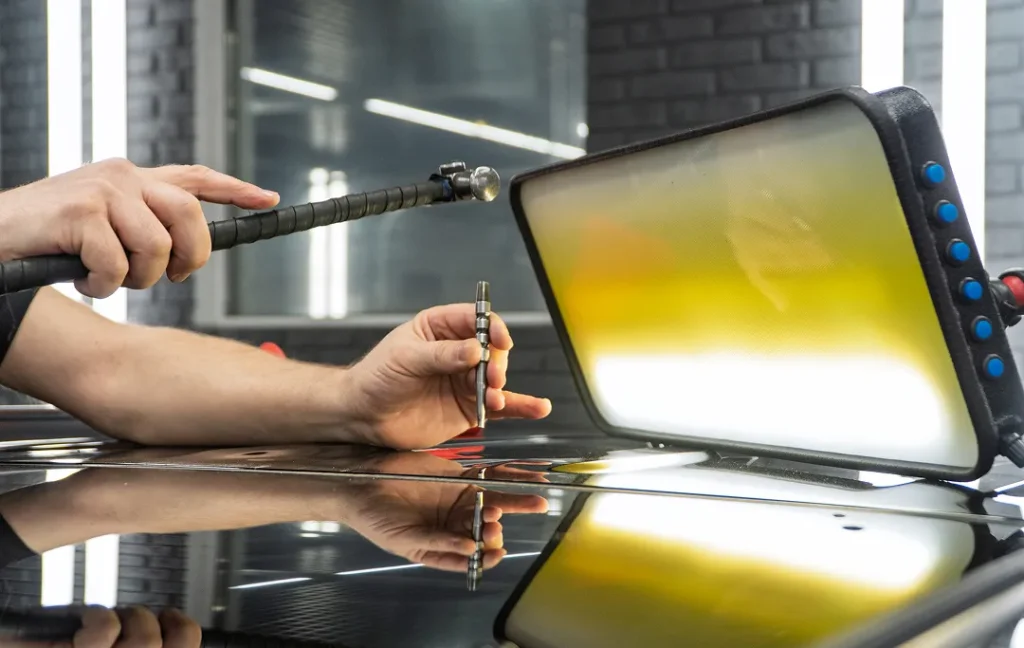
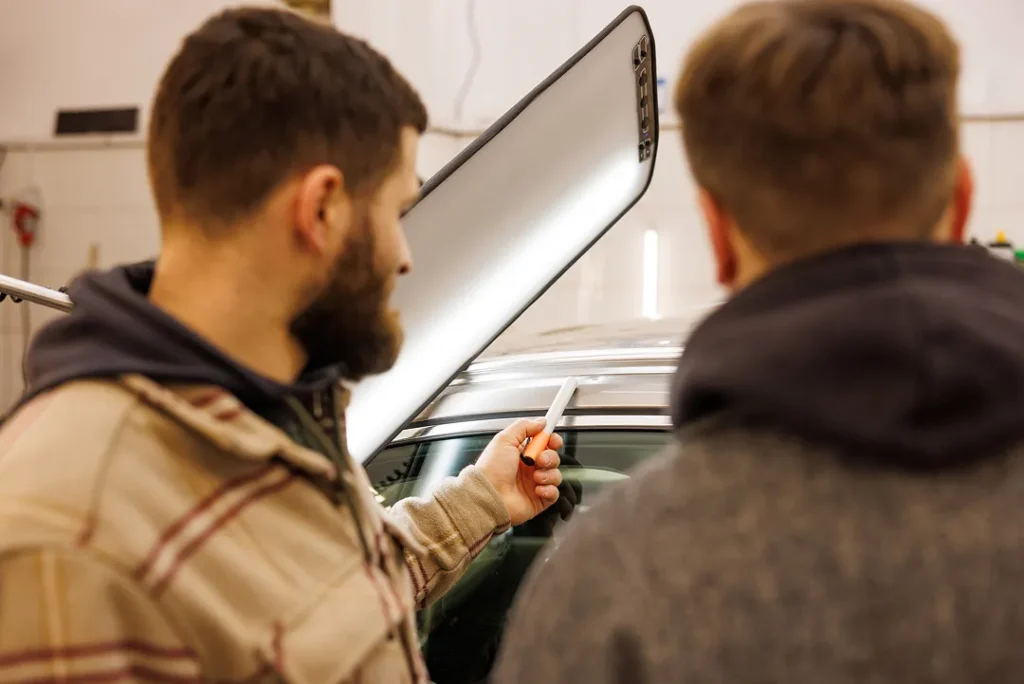
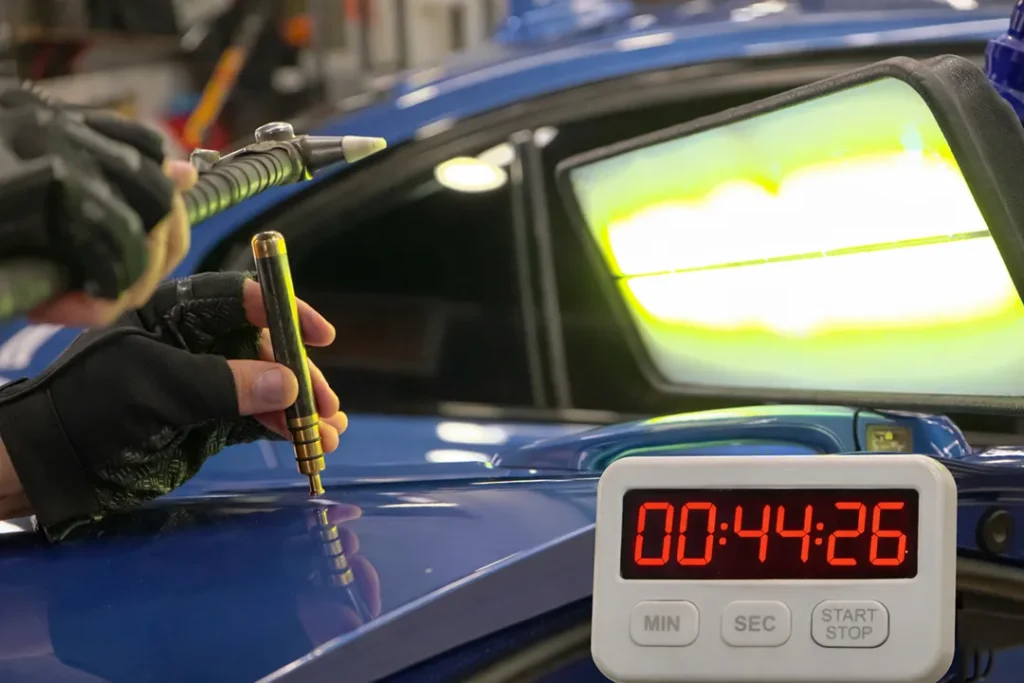
If you’d prefer to watch, you’re welcome to. Some clients find it fascinating to see the dent gradually disappear under the LED reflection board. I’m happy to explain what I’m doing as I go.
What If My Repair Will Take Longer Than Expected?
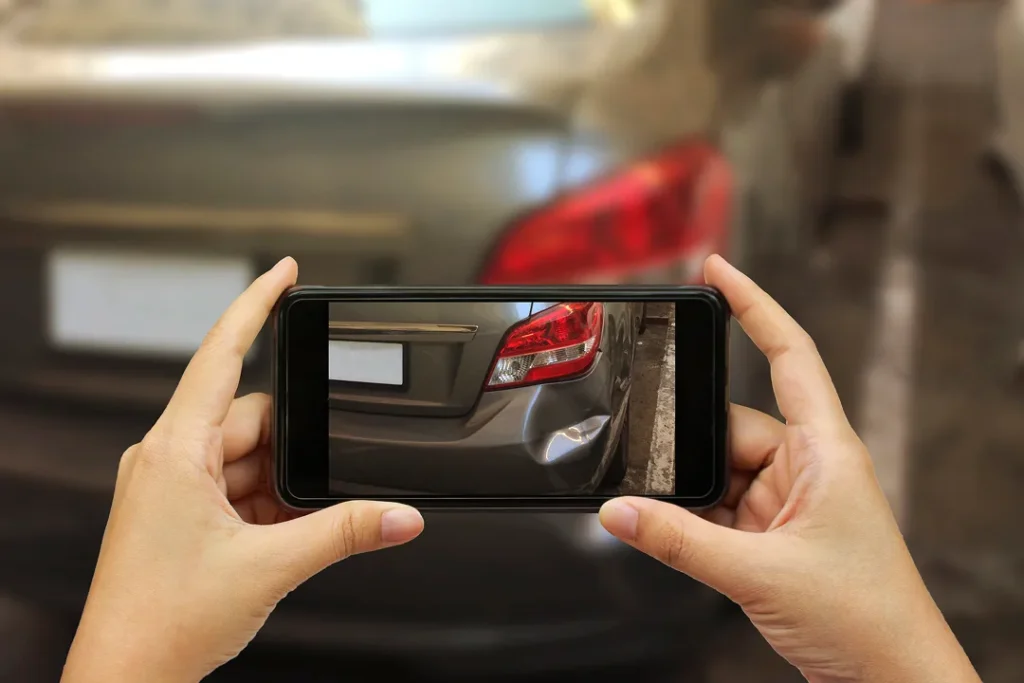
Occasionally a dent turns out to be more complex than the photos suggested — perhaps there’s a hidden crease, or the panel access is tighter than anticipated.
If this happens, I’ll pause and let you know before continuing. I’ll explain what I’ve found, how it affects the time and cost, and you decide whether to proceed. I never continue beyond the agreed scope without your permission.
This situation is rare — photos usually tell me enough to quote accurately — but I’d rather be upfront about it than have you wondering why I’m still under your car two hours later than expected.
Planning Your Day Around a Repair
For scheduling purposes, here’s a practical guide:
If you have a small ding: Allow 1 hour. You could have it done during a lunch break or while working from home in the morning.
If you have a medium dent or crease: Allow half a day. Book a morning slot and the car is ready after lunch.
If you have multiple dents or hail damage: Allow a full day. For severe hail across many panels, we may need two visits — I’ll tell you upfront.
If you’re a dealer with trade stock: We’ll agree a schedule that works for your operation. Many of my dealership clients book a regular morning each week for me to work through whatever needs attention.
Ready to Book?
Send photos of your dent and I’ll tell you exactly how long the repair will take — alongside the fixed price. No guesswork, no surprises.
→ Send photos via WhatsApp → Use the contact form → Not sure if PDR is right for your dent?
Key Takeaways
- Most single dent repairs take under 2 hours
- Small door dings: 20–40 minutes. Creases: 2–4 hours. Full hail: 1–2 days
- Creases are the biggest time factor — they double or triple repair time
- Panel access, metal type and even temperature affect timing
- Your car is ready to drive immediately — no drying or curing period
- You don’t need to be present during the repair
- Send photos and I’ll give you an accurate time estimate with your quote